Choosing the right Printed Rigid Box supplier requires more than comparing attractive samples or low quotations. Packaging has become a strategic business tool. Grand View Research valued the global luxury packaging market at approximately USD 17.6 billion in 2023. It also projects steady growth through 2030. This trend reflects stronger demand for premium presentation, memorable unboxing, and responsible material choices. However, luxury packaging data does not represent every rigid box project. The difference matters.
A reliable supplier should demonstrate production experience, technical control, and transparent quality procedures. Ask for factory photographs, material specifications, color standards, and recent project samples. A box may look impressive under showroom lighting, yet fail during stacking, shipping, or humid storage. Practical testing is essential. Check board thickness, corner alignment, magnet strength, print registration, and surface resistance. Smithers’ The Future of Global Packaging to 2028 highlights continued pressure for packaging efficiency, sustainability, and supply-chain resilience. These expectations should influence supplier selection.
Cost still matters. It should not lead the decision. Request a detailed quotation covering tooling, sampling, printing, finishing, packaging, and delivery. Confirm whether FSC-certified paper, recycled board, or water-based coatings are available. Certifications require verification, not assumptions. Reported market forecasts also vary by scope and methodology. That is easy to overlook. A responsible supplier explains limitations, accepts reasonable testing, and documents corrective actions. The best Printed Rigid Box partner is not simply the cheapest manufacturer. It is the supplier that protects appearance, performance, timelines, and your brand reputation.
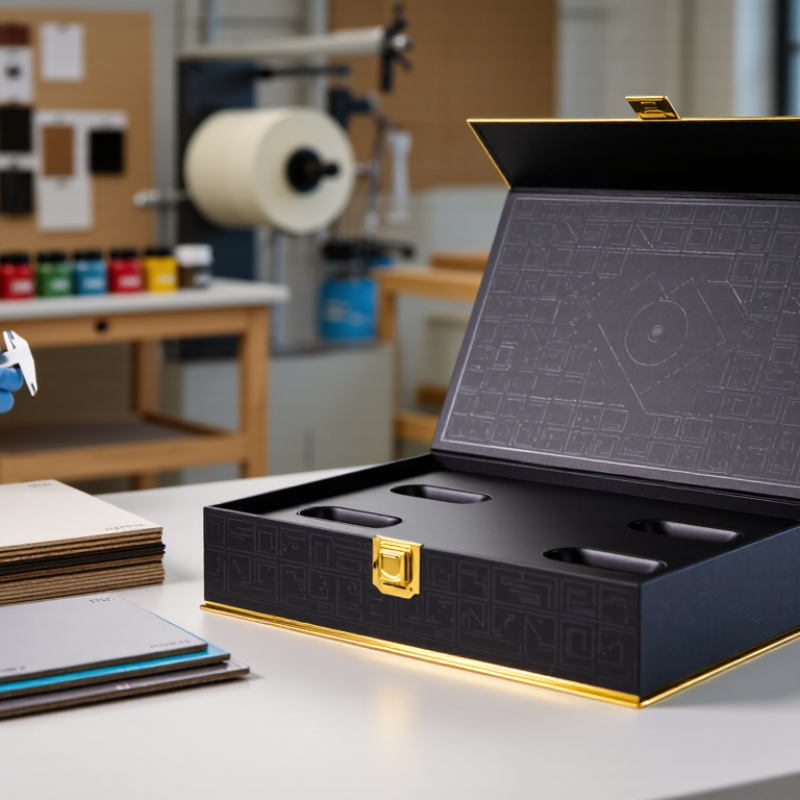
How to Choose the Best Printed Rigid Box Supplier?
Printed rigid boxes come in several practical formats. A two-piece box suits products that need a clean, premium presentation. Drawer boxes create a slower opening experience. Magnetic closure boxes offer convenience, while hinged-lid styles support repeated use. Shoulder-neck boxes add visible depth between the lid and base. The right structure depends on product weight, shelf display, and customer handling.
Customization should begin with accurate measurements. A box that is only slightly tight may damage corners during packing. Common options include coated paper, textured paper, foil stamping, embossing, debossing, and spot finishes. Printed artwork can use full-color coverage or restrained typography. Interior trays may use paperboard, foam, molded pulp, or fabric-covered inserts. Each material changes the cost, appearance, and recycling process. Some combinations look impressive but feel excessive.
Supplier evaluation requires more than viewing digital images. Request a physical sample with your actual dimensions and printed artwork. Check lid alignment, hinge movement, edge wrapping, color consistency, and insert stability. Ask about board thickness, production tolerances, proof approval, and transit testing. In my experience, a glossy sample can hide weak corners. I once underestimated insert movement during shipping. That mistake changed the final structure. A reliable supplier explains limitations clearly and records every approved detail. Availability of test reports and responsible material documentation also supports a more dependable purchasing decision.
| Printed Rigid Box Type | Typical Structure | Best-Suited Products | Common Customization Options | Key Advantages | Potential Limitations | Supplier Evaluation Focus |
|---|---|---|---|---|---|---|
| Two-Piece Lid and Base Box | Separate rigid base and removable lid, usually made from paper-wrapped greyboard. | Cosmetics, candles, apparel accessories, confectionery, electronics accessories. | Offset printing Foil stamping Embossing Paper inserts | Strong presentation, simple opening experience, and good protection during handling. | Requires more material and storage space than some collapsible formats. | Check lid fit, corner accuracy, board thickness, and color consistency. |
| Book-Style Magnetic Box | Hinged cover with concealed or exposed magnets and a rigid tray or base. | Premium gifts, watches, jewelry, skincare sets, and luxury promotional kits. | Magnetic closure Ribbon pull Window Custom insert | Premium unboxing experience and convenient repeated opening and closing. | Higher unit cost; magnets may require packaging and transport compliance checks. | Verify magnet positioning, hinge durability, closure strength, and insert fit. |
| Drawer-Style Rigid Box | Sliding inner tray housed inside a rigid outer sleeve, with a ribbon, finger notch, or pull tab. | Jewelry, small electronics, stationery, fragrances, and gift sets. | Ribbon pull Die-cut window Sleeve printing Foam insert | Distinctive opening motion, good product organization, and strong shelf presence. | Sliding tolerance must be controlled; excessive friction can affect usability. | Assess tray movement, sleeve alignment, pull-tab strength, and dimensional tolerances. |
| Shoulder-Neck Rigid Box | Base, raised shoulder, and removable lid create a stepped architectural profile. | Perfume, spirits, premium skincare, glass containers, and collectible products. | Contrasting papers Foil details Logo embossing Protective insert | High-end appearance and a secure lid position with strong structural support. | More assembly steps and tighter production tolerances than basic box styles. | Check shoulder alignment, lid stability, edge finishing, and protective cushioning. |
| Collapsible Rigid Box | Rigid panels connected with fabric or paper hinges so the box can fold flat for shipping. | E-commerce gift packaging, apparel, footwear accessories, and subscription products. | Magnetic flap Ribbon closure Printed wrap Flat-pack delivery | Reduces storage and freight volume while retaining a premium rigid-box appearance. | Hinges and fold lines need careful construction to prevent cracking or misalignment. | Request folded and assembled samples; inspect hinge strength and flatness. |
| Window Rigid Box | Rigid box with a die-cut opening covered by clear PET or another transparent film. | Food gifts, toys, cosmetics, crafts, candles, and products where visibility matters. | Custom window shape Clear film Printed border Inner tray | Allows product inspection without opening and supports strong visual merchandising. | Window material can add cost and may reduce protection against dust or impact. | Confirm film clarity, bonding quality, cut-edge cleanliness, and product visibility. |
| Eco-Focused Printed Rigid Box | Rigid-board construction using recyclable paper wraps, water-based coatings, or reduced plastic components. | Natural cosmetics, sustainable gifts, specialty foods, and environmentally conscious products. | Recycled board Uncoated paper Water-based coating Paper insert | Supports sustainability messaging and can reduce non-paper components. | Paper surfaces may show more scuffing or color variation without protective finishing. | Request material specifications, recycled-content information, and recyclability guidance. |
| Multi-Compartment Rigid Box | Rigid outer shell with dividers, trays, foam, molded pulp, or paperboard compartments. | Gift collections, beverage sets, beauty kits, tools, and multi-item product bundles. | Die-cut divider Molded pulp Foam insert Custom cavities | Separates products, improves presentation, and helps prevent movement in transit. | Higher tooling and assembly requirements; internal fit must be tested carefully. | Evaluate drop-test performance, cavity tolerances, assembly time, and insert material. |
| Common Customization and Quality Criteria | Applied across box formats according to product size, protection needs, brand artwork, and budget. | Any product requiring printed presentation packaging with a rigid structure. | CMYK or spot color Matte or gloss finish Spot UV Embossing Foil stamping | Allows the packaging to match product positioning, retail requirements, and customer experience goals. | Additional finishes, tooling, inserts, and small quantities generally increase unit cost. | Compare prototypes, color proofs, material samples, production lead time, quality controls, and packaging tests. |
Note: Specifications, costs, minimum order quantities, and lead times vary according to box dimensions, materials, printing method, finishing processes, insert design, order quantity, and destination. Request a physical prototype and a formal production specification before placing an order.
Record length, width, height, weight, and the product’s center of gravity. Specify board thickness, paper texture, printing, coating, closure, and insert material. Small details matter.
Define color tolerance, surface defects, glue-line limits, edge alignment, and dimensional variation. Request a pre-production sample and a written inspection plan. Photographs are not enough.
Compare board thickness, paper weight, coating, recycled content, and insert materials.
Samples reveal warping, rough edges, weak corners, and color changes. Open and close each box repeatedly. Touch exposes problems.
Separate board, printing, finishing, tooling, packing, and freight costs. Compare quotes using identical dimensions and print coverage. Ask about prices at several order quantities.
Smaller orders may cost more per box but reduce storage waste and cash pressure. Ask whether future orders can reuse existing tooling. Write every assumption down.
Separate sampling, artwork approval, material purchasing, manufacturing, inspection, and delivery. Include buffer days for color correction or material shortages. Freight can cause surprises.
Check the issuing organization, scope, validity dates, and supporting documents. Request evidence for recycled content and responsible fiber sources. Vague environmental claims deserve questions.
Confirm procedures for damaged cartons, color variation, missing parts, and replacements. Ask about response times and required evidence. Keep approved samples for comparison.
Request written details for dimensions, printing, tolerances, packaging, and production dates. Notice whether difficult questions receive clear answers. My own verbal agreement failed once.
Choosing the best Printed Rigid Box supplier requires more than comparing prices. Start by understanding the available box styles, structures, finishes, and customization options, then define your packaging requirements, brand presentation goals, durability expectations, and quality standards. A reliable supplier should have relevant experience, stable production capacity, modern manufacturing technology, and the ability to manage both standard and complex custom projects.
When evaluating potential suppliers, compare material quality, pricing transparency, minimum order quantities, production schedules, and shipping lead times. Request physical samples to assess printing accuracy, color consistency, construction, and overall finish. It is also important to review certifications, quality-control procedures, communication efficiency, and after-sales support. A supplier that responds clearly, provides realistic timelines, and resolves issues responsibly can help reduce production risks. By considering these factors together, businesses can select a dependable partner capable of delivering attractive, durable, and consistently high-quality packaging.

 NSW Printing