Choosing the right Drawer Box for global sourcing is not simply a price comparison. It requires practical evaluation, supplier knowledge, and clear communication across borders. A suitable box must match the cabinet design, drawer hardware, expected load, and production environment. Small differences matter. A two-millimeter variation can affect alignment, installation speed, and customer satisfaction.
Experienced buyers usually examine material quality, joint construction, surface finish, and dimensional consistency. Solid wood may offer warmth and strength, while plywood or engineered panels can improve stability and cost control. Moisture resistance also deserves attention, especially for kitchens, bathrooms, and humid shipping routes. Ask suppliers for detailed specifications, production samples, inspection records, and realistic lead times. Photographs are useful, but physical samples reveal rough edges, uneven coatings, and weak joints more clearly.
Quality checks should include repeated opening tests, load testing, coating adhesion, and packaging inspection. Reliable suppliers explain their process instead of making broad promises. They should also identify acceptable tolerances before mass production begins. Do not assume the cheapest quotation is the best value. Hidden expenses may appear through rework, damaged shipments, or inconsistent batches. Mistakes happen. Even experienced sourcing teams can overlook a hardware compatibility issue or underestimate local installation habits. That is why trial orders and documented approvals remain valuable. A careful Drawer Box decision balances performance, appearance, compliance, logistics, and long-term service. The right choice is rarely perfect, but it should be measurable, dependable, and suitable for its actual use.
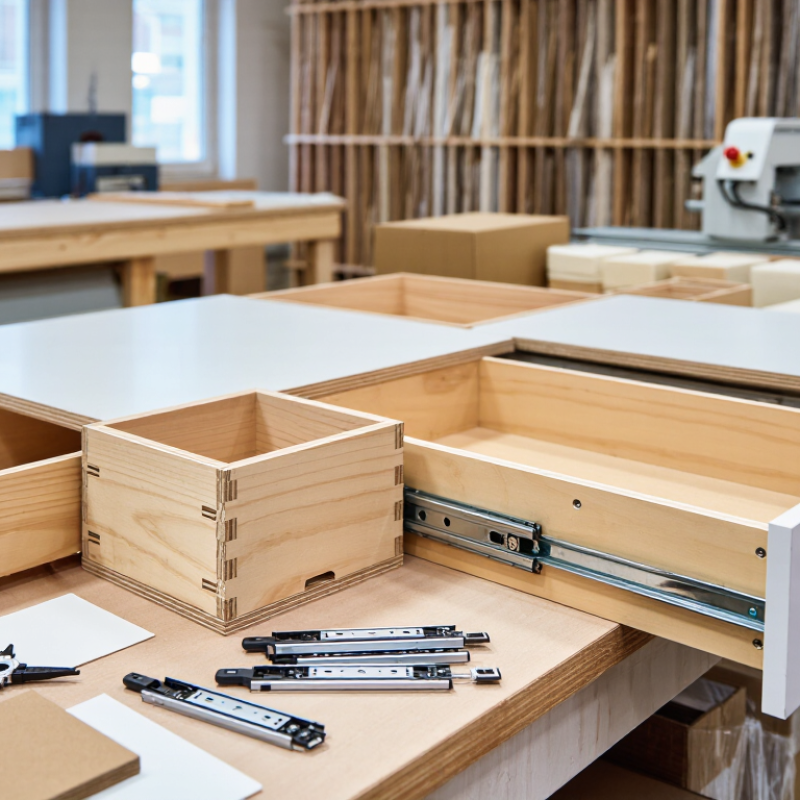
Define Your Drawer Box Requirements and Sourcing Goals
Before requesting quotes, define exactly what the drawer box must do.
Measure the cabinet opening, drawer depth, front thickness, and available clearance. State whether dimensions are internal or external. Small differences matter. Specify the material, panel thickness, joint style, finish, and expected load. A kitchen drawer carrying cookware needs different strength from a bedroom drawer holding clothing. Include slide type, drilling positions, soft-close requirements, and acceptable dimensional tolerances.
In global sourcing, your goal should be more than the lowest unit price.
Set targets for landed cost, monthly volume, lead time, packaging quality, and replacement handling. Ask suppliers for material declarations, test reports, moisture controls, and responsible wood documentation when relevant. Confirm their production capacity through samples and recent inspection records. I have found that a clear drawing prevents more problems than a long email.
Leave room for practical review.
A specification can still be wrong after approval. Test a sample in the actual cabinet, under realistic weight, before placing a larger order. Check corner alignment, surface consistency, screw holding, and damage after transport. Discuss minimum order quantities and production changes early. Your sourcing plan may need two approved suppliers, although this can increase coordination work. Perfect control is unlikely; visible assumptions are easier to correct.
Compare Drawer Box Materials, Structures, and Construction Methods
Choosing drawer boxes for global sourcing starts with the material, not the catalog image. In production reviews, I compare solid wood, plywood, and medium-density fiberboard against humidity, load, and finish requirements. Solid wood offers a warm grain and strong screw holding, but seasonal movement can affect joint alignment. Plywood stays more stable across changing climates. Its edge layers may need careful sealing. MDF machines smoothly and supports consistent painted surfaces. However, damaged edges are difficult to repair. No material wins every project.
Structure changes performance. Dovetail boxes resist pulling forces and suit wide, frequently used drawers. Rabbet-and-screw construction can reduce cost, but joint accuracy becomes critical. Dowel or confirmat assemblies are practical for flat-pack logistics. They depend heavily on drilling precision. A thicker bottom panel reduces flex under cookware or tools. Yet extra thickness adds weight and shipping cost. Check internal dimensions, not only external size. Small errors matter.
Construction methods should match factory capability and inspection access. Ask for moisture content records, panel thickness tolerances, joint samples, and repeated open-close testing. Inspectors can measure diagonal differences to detect racking. For overseas orders, approve a sealed sample before mass production. I once accepted a visually clean sample without testing its bottom support. That was a mistake. Packaging also deserves attention; corner protection can prevent crushed joints during transit. Clear drawings, approved materials, and measurable acceptance criteria make supplier comparisons more reliable, though they cannot remove every sourcing risk.
Evaluate Suppliers, Manufacturing Capabilities, and Quality Standards
When choosing a drawer box for global sourcing, evaluate the supplier before comparing prices. Ask for factory photos, production records, and recent quality reports. A reliable supplier should explain its wood, panel, coating, and hardware sources clearly. Vague answers often create costly problems later.
Inspect manufacturing capabilities through samples, not promises. Check cutting accuracy, joint strength, surface smoothness, and drilling positions. Ask how the factory controls moisture content during storage and production. Request a sample from regular production, not a specially prepared showroom piece. I once trusted a beautiful sample, but the bulk shipment showed uneven gaps. That mistake changed my inspection process.
Quality standards must be measurable and documented. Confirm acceptable tolerances for width, drawer movement, load capacity, color variation, and visible defects. Review inspection points before production begins. Independent inspections can verify dimensions, packaging, and random samples before shipment. The supplier should also maintain batch records and corrective-action reports. Ask how rejected components are isolated. Small details matter. A capable factory can explain its daily checks, equipment maintenance, worker training, and production capacity without hesitation. Still, capacity figures may be optimistic, so compare them with delivery history and factory activity. Request test results that match your intended market requirements, while checking whether certificates are current and traceable. Do not assume one audit proves everything. Suppliers can improve, decline, or change subcontractors. Regular communication and periodic inspections remain necessary.
How to Choose the Right Drawer Box for Global Sourcing?
Reference evaluation weighting for comparing drawer-box suppliers, manufacturing capabilities, and quality standards.
Prioritize suppliers that can demonstrate material traceability, stable production processes, dimensional control, load and durability testing, documented quality management, and export-ready packaging. ISO 9001 is commonly used to assess quality-management systems, while product checks should also cover moisture, tolerances, joints, surface finish, and functional performance.
Check Dimensions, Hardware Compatibility, Packaging, and Shipping Needs
How to Choose the Right Drawer Box for Global Sourcing?
A drawer box can look perfect in a sample and still fail during installation. Measure the cabinet opening, drawer length, side clearance, and bottom position. Measure twice. Small errors matter. Confirm whether dimensions refer to the external box or the usable internal space. This difference affects storage capacity and fitting accuracy. For large orders, request a dimensional drawing and inspect several samples from different production batches.
Hardware compatibility needs equal attention. Check runner length, mounting holes, load rating, and adjustment range. Confirm the box material and thickness match the selected hardware. Some systems require specific drilling positions or connector types. A practical test should include a fully loaded drawer, repeated opening, and soft-closing performance. I once approved a sample after testing it empty. That decision was too optimistic. Real household weight exposed slight sagging within weeks.
Packaging and shipping can change the sourcing result. Use corner protection, moisture barriers, and dividers between finished surfaces. Ask for carton drop-test records when long-distance transport is expected. Calculate the packed volume, stack limits, and pallet height before confirming freight costs. Shipping changes everything. Flat packing may reduce space, but it can increase assembly time and damage risk. A trial shipment often reveals crushed corners, loose hardware, or unclear installation instructions before the main order leaves the factory.
Select the Best Supplier Through Sampling, Cost Analysis, and Verification
Choosing the right drawer box begins with a controlled sample, not a catalogue photo. Request three units with identical dimensions, wood species, joint style, coating, and runners. Measure internal width, squareness, moisture content, and bottom deflection. Then load each box with the planned weight for repeated cycles. A drawer that feels smooth empty may sag under 25 kilograms.
A useful benchmark comes from ISO 2859-1, which provides recognized acceptance-sampling procedures for batch inspection. It does not replace engineering judgment. Define critical defects, such as cracked joints or unsafe movement, before production. Also record minor defects, including uneven staining or small gaps. In our sourcing work, one attractive sample passed visual review but failed after humidity exposure. That was an expensive reminder.
Cost analysis should include tooling, packaging, inspection, freight, replacement rates, and payment terms. The 2023 Deloitte Global Chief Procurement Officer Survey reported that cost management remained a leading procurement priority, while supply risk continued to influence decisions. Compare suppliers using the same specification sheet. Ask for material certificates, process-control records, and recent batch photos. The 2022 McKinsey Global Survey found that 93% of supply-chain leaders had pursued resilience improvements after major disruptions. A low unit price can hide weak capacity. I would still challenge the data. Supplier documents can be polished, incomplete, or outdated. Verify randomly, visit when practical, and approve a pre-shipment sample before releasing the balance.
FAQS
Review factory photos, production records, quality reports, and material sources. Vague answers may create expensive problems later.
Request samples from regular production. Check cutting accuracy, joint strength, surface smoothness, and drilling positions. Promises are not enough.
Excess moisture can cause swelling, gaps, or movement problems. Ask about storage conditions, moisture checks, and corrective actions.
Confirm tolerances for width, drawer movement, load capacity, color variation, and visible defects. Written limits reduce later arguments.
Inspect several samples from different batches. Test a fully loaded drawer, repeated opening, and soft-closing performance. Empty tests can mislead.
Measure the cabinet opening, drawer length, side clearance, and bottom position. Confirm whether measurements describe external or internal space. Measure twice.
Check runner length, mounting holes, load rating, adjustment range, material thickness, and connector types. Test the actual hardware with the box.
Request corner protection, moisture barriers, surface dividers, and drop-test records. Calculate packed volume, stack limits, and pallet height before shipping.
No. Suppliers can change workers, processes, or subcontractors. Use batch records, periodic inspections, and independent checks before shipment. I once trusted too quickly.
Conclusion
Choosing the right Drawer Box for global sourcing begins with clearly defining your project requirements, target market, budget, design preferences, and expected order volume. Consider the differences among available materials, construction methods, joint styles, finishes, and structural designs to determine which option best balances appearance, durability, performance, and cost. A suitable drawer box should also match the intended furniture application and meet the required quality expectations.
Supplier evaluation is equally important. Review manufacturing capabilities, production capacity, quality control procedures, certifications, and experience with international orders. Before making a decision, confirm precise dimensions, load requirements, hardware compatibility, packaging methods, shipping conditions, and protection against damage during transit. Request samples to verify workmanship and test fit, strength, finish, and functionality. Finally, compare total costs rather than unit prices alone, including tooling, packaging, shipping, inspection, and potential replacement expenses. Careful sampling, cost analysis, and supplier verification will help you select a reliable Drawer Box solution that supports consistent quality and efficient global sourcing.

 NSW Printing