Choosing the right Rigid Packaging Box requires more than comparing colors, finishes, and unit prices. The box must protect the product, represent the brand, and perform reliably through storage, transport, and opening. A rigid box with a weak shoulder, inaccurate magnet, or poorly fitted insert can look premium yet fail in real use. Small details matter.
Industry data supports this careful approach. Smithers’ “The Future of Global Packaging to 2028” identifies continued growth in packaging demand, driven by e-commerce, premium branding, and product protection. PMMI’s report, “Shifting Sands: The Impact of E-Commerce on Packaging and Processing,” also highlights the need for packaging that withstands more handling and distribution stages. Meanwhile, the Ellen MacArthur Foundation reports that packaging represents a major share of global plastic use, reinforcing the importance of material efficiency and responsible design.
A dependable Rigid Packaging Box should be assessed through board thickness, compression strength, surface durability, insert accuracy, and recyclability. Ask for samples. Test the box with the actual product, not an empty mock-up. Check whether a 30-centimeter drop damages the corners or shifts the insert. Also review supplier quality records, sampling standards, and production tolerances. A lower quotation may hide higher replacement costs.
There is no perfect specification. A heavier box may feel luxurious but increase shipping emissions and expenses. The best choice balances protection, appearance, usability, sustainability, and measurable performance. That balance deserves careful testing, not assumptions.
Define Product, Brand, and Protection Needs Before Choosing a Rigid Box
How to Choose the Right Rigid Packaging Box?
Define Product, Brand, and Protection Needs Before Choosing a Rigid Box
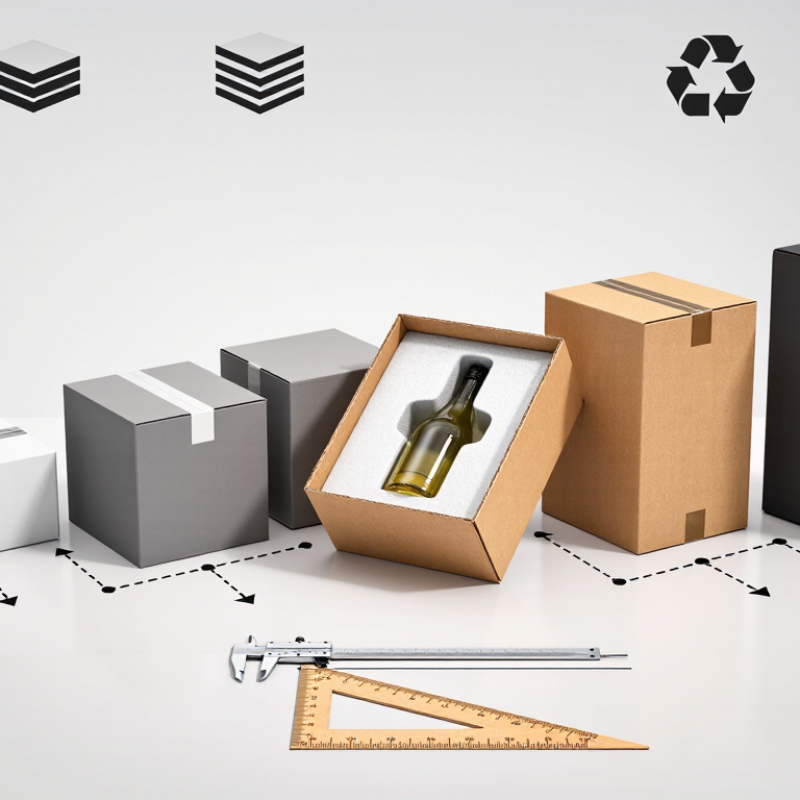
A rigid box should begin with the product, not the desired appearance. Measure the item, including fragile edges, accessories, and interior movement. Record its weight and opening frequency. A magnetic closure may suit premium gifting, while a drawer box can improve repeated access. Small details matter. Experienced packaging teams also check humidity, stacking pressure, and warehouse handling before approving dimensions. A beautiful box can still fail if the product shifts inside.
Brand requirements should guide structure and finishing choices. Consider the unboxing sequence, logo visibility, tactile surfaces, and color consistency. Too many finishes can weaken the design and inflate production costs. PwC’s 2024 Voice of the Consumer Survey covered more than 20,000 consumers across 31 countries and territories. It found that 46% were buying more sustainable products, while consumers reported willingness to pay an average 9.7% premium. This supports responsible material choices, but sustainability claims must be measurable.
Protection needs deserve physical testing, not assumptions. Use suitable inserts, corner clearance, and cushioning zones around vulnerable parts. Testing can follow ISTA 3A or ASTM D4169, depending on the distribution environment. Recycled board may support sustainability goals, yet its compression performance can vary. We sometimes overbuild boxes. That wastes material and shipping space. The better approach is a documented balance between product risk, brand expression, and verified test results. A pre-production sample should face realistic drops, vibration, stacking, and repeated opening. Real handling is rarely gentle.
Compare Paperboard, Plastic, Wood, and Metal Using Smithers Market Data
How to Choose the Right Rigid Packaging Box?
Smithers market data provides a useful starting point for comparing paperboard, plastic, wood, and metal boxes. It helps buyers assess demand patterns, material trends, and changing packaging expectations. However, market data should guide decisions, not replace product testing.
Paperboard works well for lightweight products and printed presentation. It is easy to customize and often supports efficient shipping. Yet moisture and compression can become problems during long storage. Plastic offers stronger impact resistance and reliable protection against humidity. Its weakness is environmental perception, especially when recovery systems are limited. Wood creates a warm, premium feeling. It also handles heavier items well, but its weight and surface variation can increase costs.
Metal provides excellent strength and a clear sense of durability. It suits products needing rigid protection, stacking resistance, or repeated use. Still, dents, finishing requirements, and transport weight deserve attention. In practical packaging trials, I would test each box with the actual product, not an empty sample. Check corner damage, lid movement, surface scratches, and warehouse temperature changes. Small details matter.
A Smithers-based comparison should also include total cost, material availability, manufacturing capacity, and end-of-life options. The cheapest box may create higher shipping costs. The strongest box may be unnecessarily heavy. This is where packaging choices become less obvious. My first preference can change after one drop test. Measure twice. Then question the result.
How to Choose the Right Rigid Packaging Box?
Compare Paperboard, Plastic, Wood, and Metal Using Representative Material-Property Data
Representative density values are shown in grams per cubic centimeter. Lower-density materials can reduce package weight, while higher-density materials may provide greater rigidity, impact resistance, or premium appearance. Actual performance varies by grade, structure, coating, and manufacturing process.
Reference values: paperboard approximately 0.70 g/cm³, polypropylene plastic approximately 0.91 g/cm³, softwood approximately 0.60 g/cm³, and aluminum approximately 2.70 g/cm³.
Calculate Box Dimensions, Strength, and Load Capacity for Product Safety
How to Choose the Right Rigid Packaging Box?
Calculate Box Dimensions, Strength, and Load Capacity for Product Safety
A rigid packaging box should fit the product closely without squeezing it. Measure the product’s length, width, and height at its widest points. Add space for cushioning, protective wraps, and easy removal. Small gaps matter. My early estimates were often too optimistic because I measured the product, not the complete packed unit. Use the internal dimensions for product planning, then confirm the external dimensions for shipping and storage.
Tips: Measure twice. Record every dimension in the same unit. Test a filled sample before ordering in quantity. Check how boxes will be stacked, lifted, and transported. A box carrying a 4-kilogram product may need much higher compression strength when several boxes are stacked above it. Include a safety factor for vibration, moisture, uneven floors, and occasional handling errors. Do not guess.
Load capacity depends on board structure, wall thickness, joints, and support points. A wide box with a heavy item may bend even when its material rating looks sufficient. Place the product near the center, reduce empty space, and use internal supports when weight is concentrated. Compression testing can reveal weak corners or a lid that collapses early. Drop testing also matters, though results may vary with surface and height. That uncertainty deserves attention. A practical design combines calculations with physical testing, inspection records, and clear acceptance limits before production begins.
How to Choose the Right Rigid Packaging Box? - Calculate Box Dimensions, Strength, and Load Capacity for Product Safety
Example design calculations for common rigid packaging applications
| Product Application |
Product Envelope
L × W × H (mm) |
Recommended Internal Box
L × W × H (mm) |
Clearance
Per Side (mm) |
Product Mass
(kg) |
Estimated Gross Mass
(kg) |
Recommended Rigid Board
Thickness |
Maximum Stack
Levels |
Safety Factor |
Minimum Design Load
(kg) |
Minimum Design Load
(N) |
| Small cosmetic bottle set |
150 × 90 × 40 |
170 × 110 × 60 |
10 |
0.45 |
0.55 |
1.2 mm rigid board |
5 |
3.0 |
6.60 |
64.75 |
| Electronic accessory kit |
220 × 140 × 50 |
240 × 160 × 70 |
10 |
0.80 |
0.95 |
1.5 mm rigid board |
6 |
3.0 |
14.25 |
139.79 |
| Glass food jar |
180 × 180 × 100 |
204 × 204 × 124 |
12 |
1.20 |
1.45 |
2.0 mm rigid board |
4 |
3.0 |
13.05 |
128.02 |
| Book or catalog set |
260 × 190 × 60 |
284 × 214 × 84 |
12 |
1.80 |
2.10 |
2.5 mm rigid board |
5 |
3.0 |
25.20 |
247.21 |
Calculation basis:
Internal box dimensions = product envelope dimensions + 2 × clearance per side.
Minimum design load = estimated gross mass × (maximum stack levels − 1) × safety factor.
Newton conversion uses 1 kgf = 9.80665 N.
Practical selection guidelines
| Design Dimension |
Recommended Method |
Safety Consideration |
| Length, width, and height |
Measure the product at its largest points and add clearance for protective inserts, movement, and assembly tolerances. |
Avoid excessive empty space, which can increase impact damage and reduce stacking stability. |
| Board thickness |
Use thicker rigid board for heavier products, taller boxes, glass items, and multi-level stacking. |
Thickness alone does not determine strength; board density, moisture, joints, corners, and lid construction also affect performance. |
| Load capacity |
Specify a compression-test target above the calculated minimum design load and confirm it with a finished-box test. |
Use a higher safety factor when boxes may experience humidity, long-term storage, vibration, or uneven stacking. |
| Product protection |
Add molded inserts, partitions, cushioning, or corner supports according to the product’s fragility and orientation. |
Validate the complete packaging system through vibration, drop, compression, and environmental testing. |
Note: The values shown are engineering examples based on typical rigid-board packaging configurations. Final dimensions, material grade, compression rating, and test requirements should be confirmed using the actual product, box construction, distribution environment, and applicable packaging standards.
Validate Design with ISTA 3A Testing, Cost Analysis, and Supplier Audits
Choosing the right rigid packaging box requires more than checking its appearance. A box may look premium yet fail after repeated drops, vibration, or compression. Test the proposed design under ISTA 3A conditions before approving mass production. Measure damage to the box, product, inserts, closures, and printed surfaces. Record drop heights, package orientation, and failure points. Small details matter.
Cost analysis should include more than the unit price. Compare board grades, tooling, inserts, assembly labor, freight volume, storage space, and expected damage claims. A thicker box can reduce returns, but it may also increase shipping weight. Calculate both outcomes. Use a pilot order to confirm estimates. Assumptions can be wrong.
Supplier audits add practical evidence. Review material traceability, production controls, inspection records, and corrective-action procedures. Walk through the packing line if possible. Check whether workers follow the approved specifications, not just the sample box. Ask for recent quality data and test reports. Independent verification is valuable when results seem unusually perfect. I have seen designs pass a laboratory test but struggle during manual handling. That gap deserves investigation. Keep a signed change-control process, because an unreported insert change can alter protection, fit, and final cost.
Conclusion
Choosing the right Rigid Packaging Box begins with a clear understanding of the product, brand identity, handling conditions, and protection requirements. Consider whether paperboard, plastic, wood, or metal provides the best balance of durability, appearance, weight, cost, and recyclability, using reliable Smithers market data to support the comparison. Accurate product measurements are essential for defining internal dimensions, wall thickness, structural strength, and load capacity, helping prevent damage during storage, transport, and handling.
Sustainability should also guide the decision. Evaluate material sourcing, recyclability, reuse potential, and compliance with ISO 18601 principles and EU 2030 recycled-content targets. Before production, validate the design through ISTA 3A testing, cost analysis, and thorough supplier audits. This process confirms that the Rigid Packaging Box can protect its contents, meet performance expectations, support environmental goals, and deliver consistent quality without unnecessary expense.

 NSW Printing