Choosing the right cardboard box is crucial for packaging, shipping, or storing items. The market offers various sizes and types. But not all cardboard boxes are created equal. Understanding your needs is essential for making the best choice.
When selecting a cardboard box, consider durability, size, and purpose. Some boxes might seem perfect, but they can’t bear heavy loads. A fragile item deserves better protection than a flimsy box. Crafting the right choice can prevent damage and enhance efficiency.
Box styles and materials vary significantly. Some are designed for regular use, while others are customized for specific demands. Reflecting on your requirements can help narrow down options. Inspecting the quality before purchase could save you from future regrets. Remember, the right cardboard box can secure not just items but also your peace of mind.
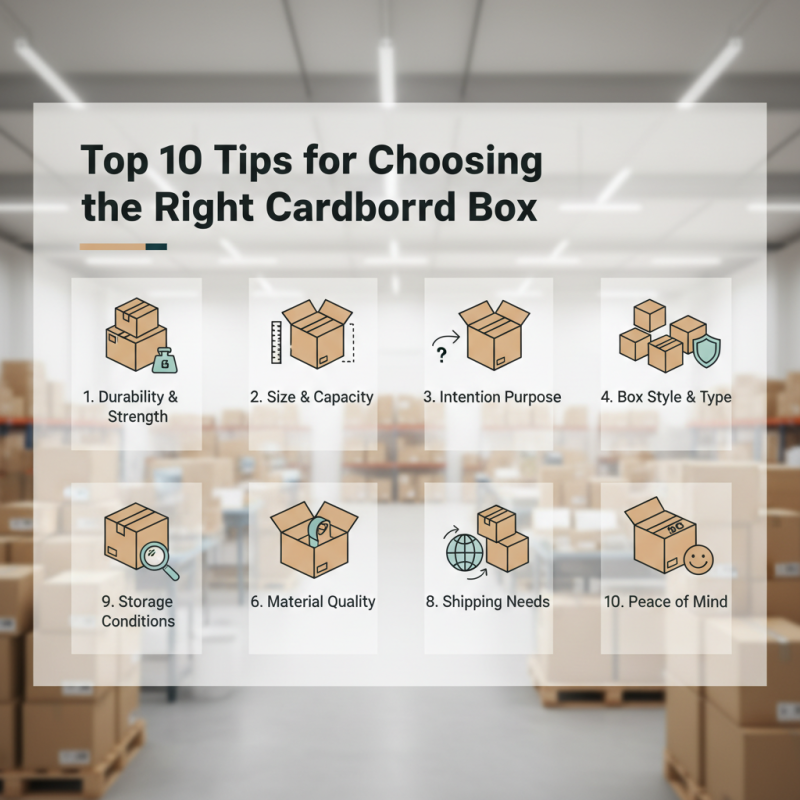
When selecting a cardboard box, it is essential to understand its purpose.
Cardboard boxes are crucial for packaging goods, ensuring safe transport, and maintaining product integrity.
A report by the Paper and Packaging Board indicates that the global cardboard packaging market was valued at over $200 billion in 2022 and is expected to grow by 3.6% annually.
This growth highlights the importance of selecting the right box type for your specific needs.
Consider the weight and dimensions of your items. Different boxes can support varying weights and resist crushing.
For instance, single-wall boxes are suitable for lightweight items, while double-wall boxes offer additional durability for heavier goods.
Make sure to evaluate the box's thickness and material quality. The right box minimizes damage, leading to better customer satisfaction.
A remarkable study from Smithers Pira points out that 83% of consumers prefer sustainable packaging.
This trend emphasizes the growing importance of choosing eco-friendly cardboard options that are both functional and appealing.
Another factor is your storage and shipping requirements. How will the boxes be stacked or stored?
Properly designed boxes can save space and reduce shipping costs. It’s crucial to analyze your logistics.
Using inadequately sized boxes can lead to increased waste and may not protect your items effectively. This can become a costly mistake.
Always reflect on what kind of boxes best meet your challenges to avoid inefficiencies in your supply chain.
Choosing the right box size is crucial for any shipping needs. A box that is too large can result in wasted space and increased shipping costs. Conversely, a box that is too small may lead to damaged goods. Start by measuring your items. Use a reliable scale to determine weight and dimensions. This information will guide your size selection.
Consider the packaging method as well. Will your items need cushioning? If so, opt for a slightly larger box to accommodate packing materials. Remember, the right box protects your products and minimizes damages. It’s worth testing different sizes to see what works best for your items.
Sometimes, people underestimate the importance of box size. They might stick to a standard choice, only to face issues later. Reflect on what has worked in the past and be open to adjustments. Checking customer feedback can also reveal common problems with specific sizes. Take these insights seriously; they can save you time and money.
When selecting a cardboard box, understanding flute types is essential for durability. Flute refers to the wave-like structure in the cardboard, which affects strength. Common types include A-flute, B-flute, and C-flute. A-flute is thick and offers excellent cushioning, suitable for fragile items. B-flute is thinner and provides a smooth surface, ideal for printing. C-flute strikes a balance between strength and flexibility.
Choosing the right flute type depends on your needs. If you're shipping electronics, A-flute’s extra cushioning matters. For retail display boxes, B-flute's smoothness enhances presentation. However, don’t overlook the thickness of the material. A poorly constructed box could lead to disappointment when it fails. Always consider the weight of your items too. If a box feels flimsy, it might not withstand the trip.
Evaluating durability also means checking the box’s stacking strength. A well-designed flute type can contribute to better stacking without collapsing. Experimenting with different flutes may lead you to the best choice. Often, customers find themselves unsatisfied after a shipment due to overlooked details. Taking the time to assess the right flute type can prevent future issues.
When selecting the right cardboard box, considering weight capacity and structural integrity is crucial. Various studies show that nearly 40% of product damage during transport results from inadequate packaging. The weight limit of a box affects its durability. Cardboard boxes come in different grades, which correspond to their strength. For instance, a box made with double-wall construction can carry more weight compared to a single-wall box. A box that cannot support its intended load risks collapsing, leading to increased costs from damaged goods.
Structural integrity depends on various factors, including the flute type and board thickness. Reported statistics indicate that a thicker cardboard can withstand more weight without compromising its form. Proper testing methods are essential. The Edge Crush Test (ECT) and Bursting Test (BT) offer insights into a box's performance under pressure. However, not all manufacturers adhere to these standards, making it important to verify the specifications. In some cases, a box may appear strong but fail in real-world scenarios.
Assessing materials is also vital. Some boxes use recycled materials, which may offer lower strength. Balancing sustainability with strength can be challenging. Reflecting on past shipping experiences may help. Perhaps, you discovered that a seemingly sufficient box was actually inadequate. This shows the importance of thorough research in making the right choice. Not all boxes are created equal, and understanding these details leads to smarter packaging decisions.
When selecting a cardboard box, cost-effectiveness and supplier reliability are crucial factors. In 2021, the global cardboard box market was valued at approximately $64 billion and is expected to grow. Yet, many companies still overlook essential aspects when choosing suppliers. An unreliable supplier can lead to delays and increased shipping costs. This can negatively affect the entire supply chain.
Evaluating the cost-effectiveness of materials is another critical aspect. Studies show that about 30% of shipping costs can be attributed to packaging. Therefore, selecting the right cardboard thickness and strength can optimize shipping expenses. Many businesses underestimate the significance of this choice. For instance, lighter materials reduce weight, lowering shipping costs. However, they may compromise durability.
Moreover, not all suppliers provide consistent quality. Companies need to assess the reliability of potential partners. If a supplier frequently fails to deliver on time or provides inferior quality boxes, the business suffers. In a 2022 survey, 45% of businesses reported issues related to supplier performance. This emphasizes the need for rigorous vetting processes. Balancing cost and reliability is vital, yet challenging. Reflection on past choices often reveals opportunities for improvement.
| Tip | Consideration | Importance Level | Cost-Effectiveness | Supplier Reliability |
|---|---|---|---|---|
| 1. Determine Your Dimensions | Measure items carefully | High | Medium | High |
| 2. Choose the Right Material | Consider weight and durability | High | High | Medium |
| 3. Check Weight Capacity | Understand how much weight it can hold | High | Medium | High |
| 4. Evaluate Eco-Friendliness | Look for recyclable options | Medium | Medium | Medium |
| 5. Consider Design and Structure | Choose a design that meets your needs | Medium | Low | High |
| 6. Assess Bulk Pricing Options | Look for discounts on larger orders | High | High | High |
| 7. Quality Assurance Reviews | Check reviews and ratings | High | Medium | High |
| 8. Understand Delivery Times | Know when you need the boxes | Medium | Low | Medium |
| 9. Verify Customer Service Support | Assess responsiveness | High | Medium | High |
| 10. Inspect Sample Products | Request samples before bulk purchase | Medium | High | Medium |
: Cardboard boxes are used for packaging goods, ensuring safe transport, and maintaining product integrity.
The weight of items dictates box choice, with single-wall boxes for lightweight goods and double-wall boxes for heavier items.
A study indicates that 83% of consumers prefer sustainable packaging, highlighting its growing importance in cardboard box selection.
Using inadequately sized boxes can lead to waste and may fail to protect items properly, causing costly mistakes.
Thicker cardboard and appropriate construction enhance durability, while recycled materials may not always meet strength requirements.
Unreliable suppliers can cause delays and increase shipping costs, negatively impacting the entire supply chain.
Approximately 30% of shipping costs are linked to packaging, so choosing the right materials can optimize expenses.
Companies should evaluate past shipping experiences and assess boxes' weight support, material quality, and supplier performance.
The Edge Crush Test (ECT) and Bursting Test (BT) help evaluate a box’s ability to handle pressure and weight.
Companies often face difficulties in selecting cost-effective, durable boxes, which can lead to re-evaluation of past choices.
Choosing the right cardboard box is essential for ensuring the safe storage and transportation of goods. Understanding the purpose of the cardboard box is the first step, as it dictates the specific requirements you need to consider. Evaluating various box sizes will help determine which dimensions best fit your items, ensuring they are securely packed.
Additionally, identifying the right flute type is crucial for achieving the desired durability, while considering the weight capacity and structural integrity ensures the box can handle its contents without failure. Finally, assessing the cost-effectiveness and reliability of suppliers will contribute to making an informed choice, ensuring you receive the best value for your packaging needs. By taking all these factors into account, you can select a cardboard box that meets your specific requirements effectively.

NSW Printing